
Chemical weeding out, Steam weeding in!
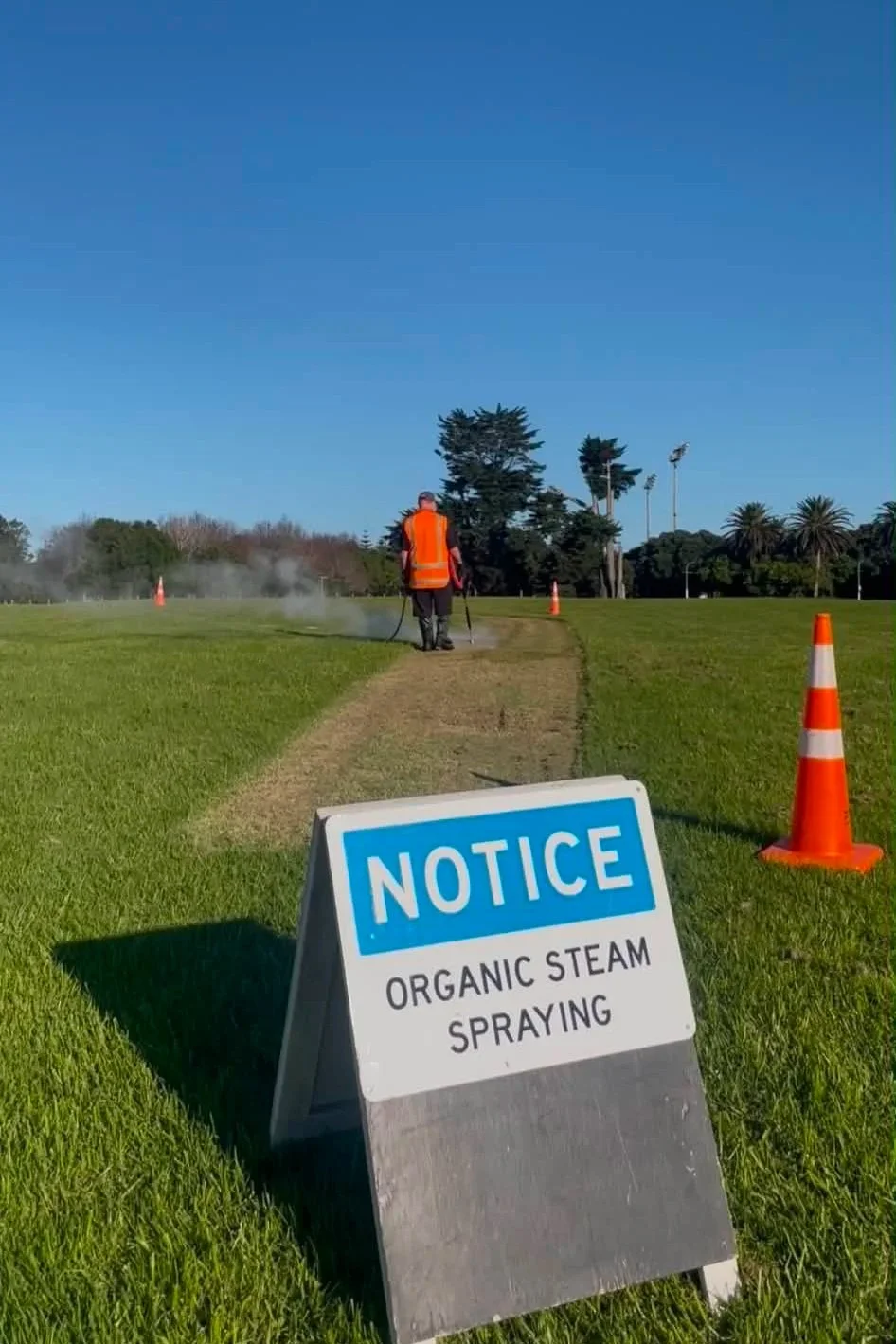
No chemicals here, just good ole steam at Te Pae o Manukau Food Forest.
With all our ducks in a row, work has finally begun on the whenua of proposed Te Pae o Manukau Food Forest. The whenua we are working with is exposed to strong westerlies and southerlies, so putting in the first lines of kaitiaki building the boundary and planting the protectors as the outer edge of the food forest, are priority. To prepare for our first working bees: planting & building, we need this edge bare.
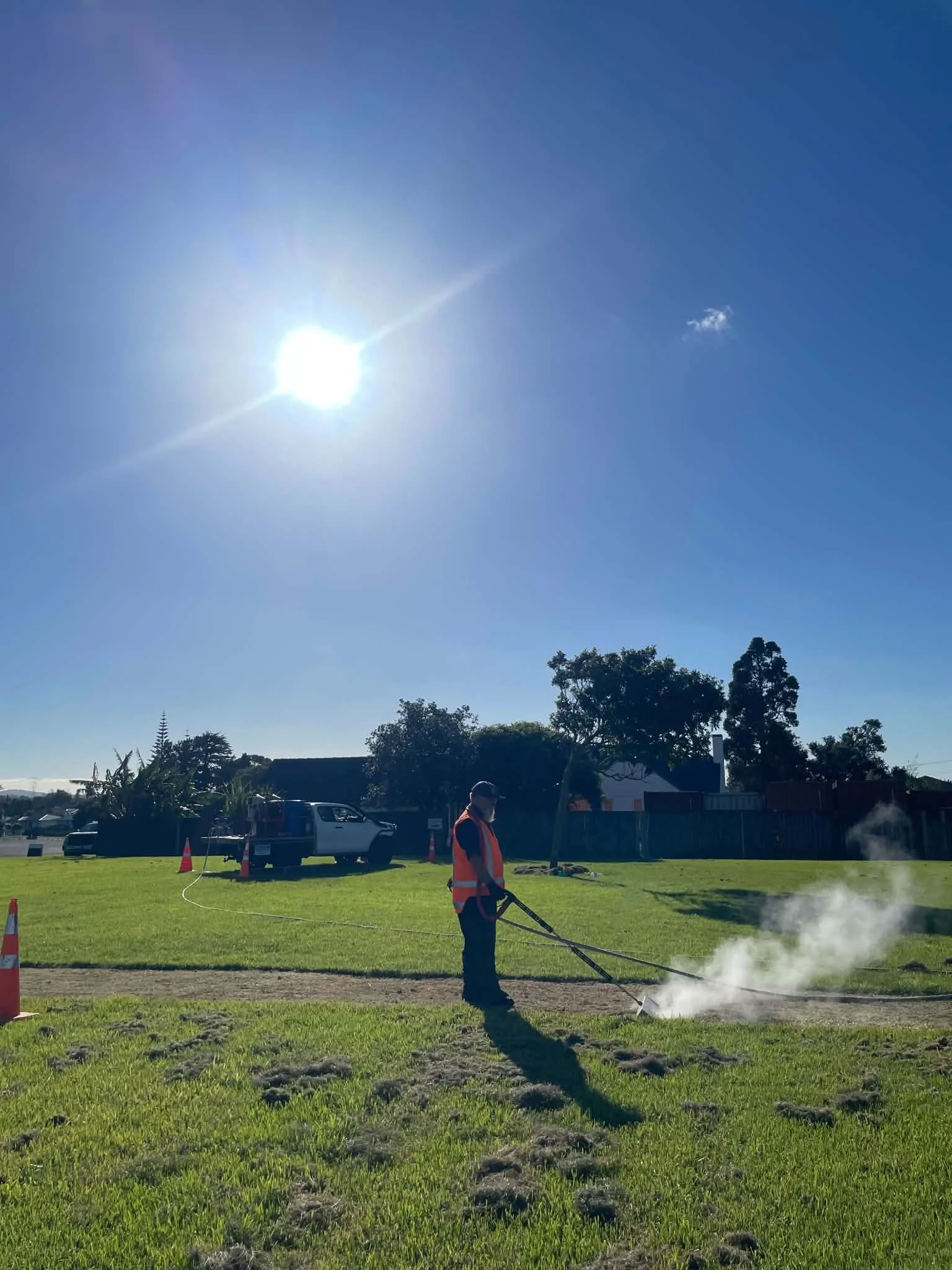
Logie steam weeding our kaitiaki edge of Te Pae o Manukau Food Forest, right behind 41 Boundary Road, Clover Park
The site is mostly covered in the hardy and invasive kikuyu grass, and something we definitely need to remove through all planting strips as we are growing food, not lawns. While hand weeding is an option, it’d be very labour intensive, especially at this scale and would take the kind of time that we just don’t have. Most would default to chemical spraying with something like glyphosate, but for us that’s not what ‘caring for creation’ looks like. Herbicides are effective at killing unwanted plants but are equally effective at killing soil organisms, our beneficial insects and pollinators, lingering in ecosystems breeding deformaties, which is the complete opposite of what we’re trying to achieve.
In the end we opted for organic weed steaming. A chemical-free way to kill back the kikuyu grass and just as potent and faster-acting than herbicides. This method uses hot pressurized steam to heat up the plant and its roots, essentially boiling it and preventing the plant and any dormant seeds from growing. Unlike synthetic weed killers, the steam doesn’t remain in the soil long after, organisms are harmed but not deformed, and soil life is actually able to repopulate faster with less bad bacteria and fungi around, thanks to sterilization through the hot steam.
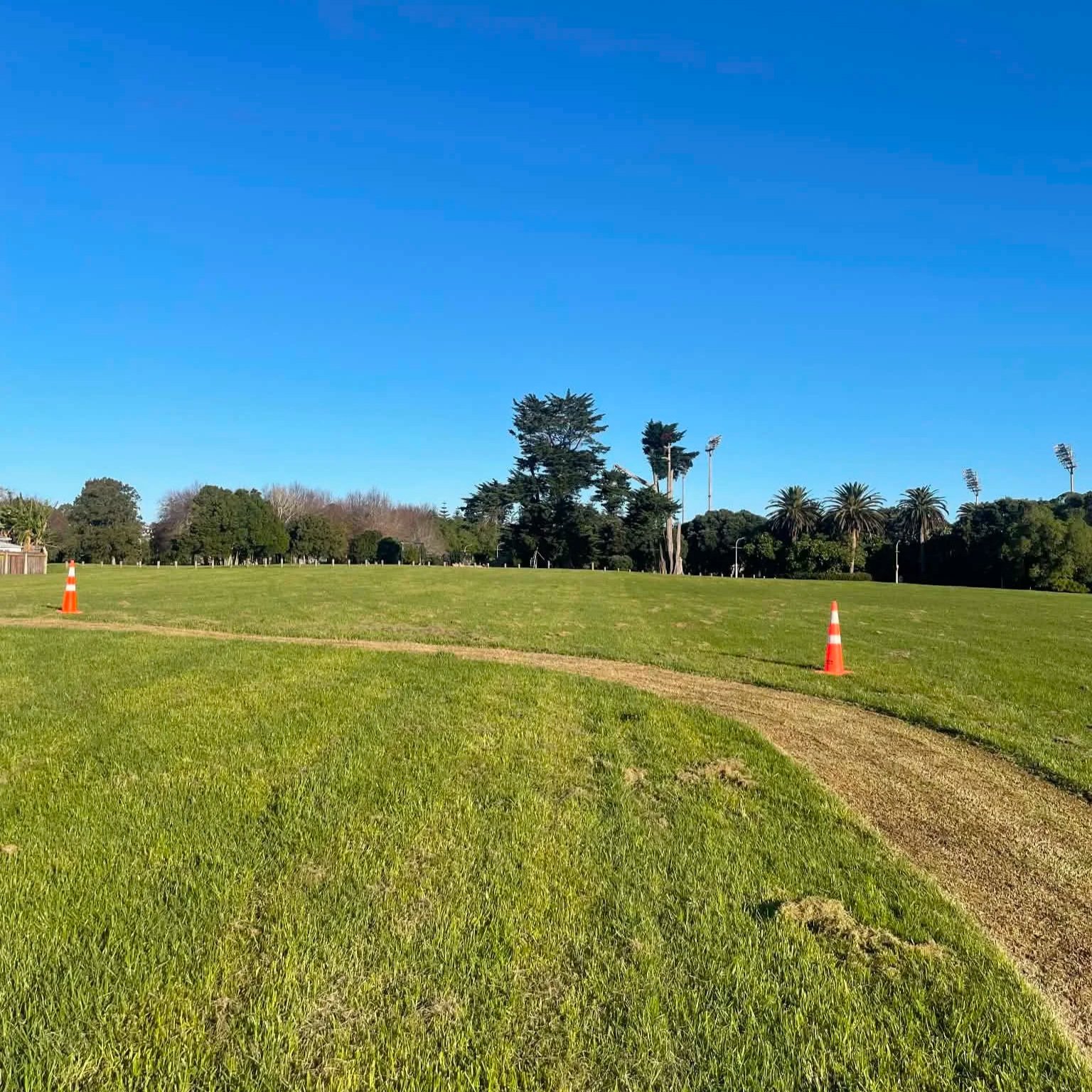
The bespoke curve in our design, inspired by the nautilus shell. Low-mowed by our incredible volunteers and steam weed done!
A bonus is you don’t have to wait for a still day to steam weed, worrying about spray drift harming people close-by or the neighbours garden. You could even do it in the rain.. The only things we needed to prepare for the steam weed, was a good mow as low as we could go. It was a finicky process due to the curved edge on our food forest design and trying to get all our measurements on par but otherwise is very straight forward. Pre-mowing the lowest you can go, helps the hot steam to get to the roots easily, without all the extra blades of grass creating a barrier.
Opting for steam weeding also upholds our stance on a spray-free Manukau. “Manukau” translates to “only birds” which paints a prehistoric picture of what once thrived in this area. By not using chemical sprays and planting a food forest of many species, we are creating that safe sanctuary that was once home for our manu (birds) and native pollinators to come back.
Thank you to our hard-working volunteers that helped us with the marking and mowing! And to Logie for steam weeding our edge. Chemical weeding out, steam weeding in!
We are ready for our upcoming working bees. ☺