
Kai Resilience in Tāmaki
For PVA we see ‘kai resilience’ as whānau & community having easy access to locally grown food in any circumstance. It restores whenua instead of depleting it and honours the whole food web, acknowledging that everybody and every organism have an important role to play in this circle of life.
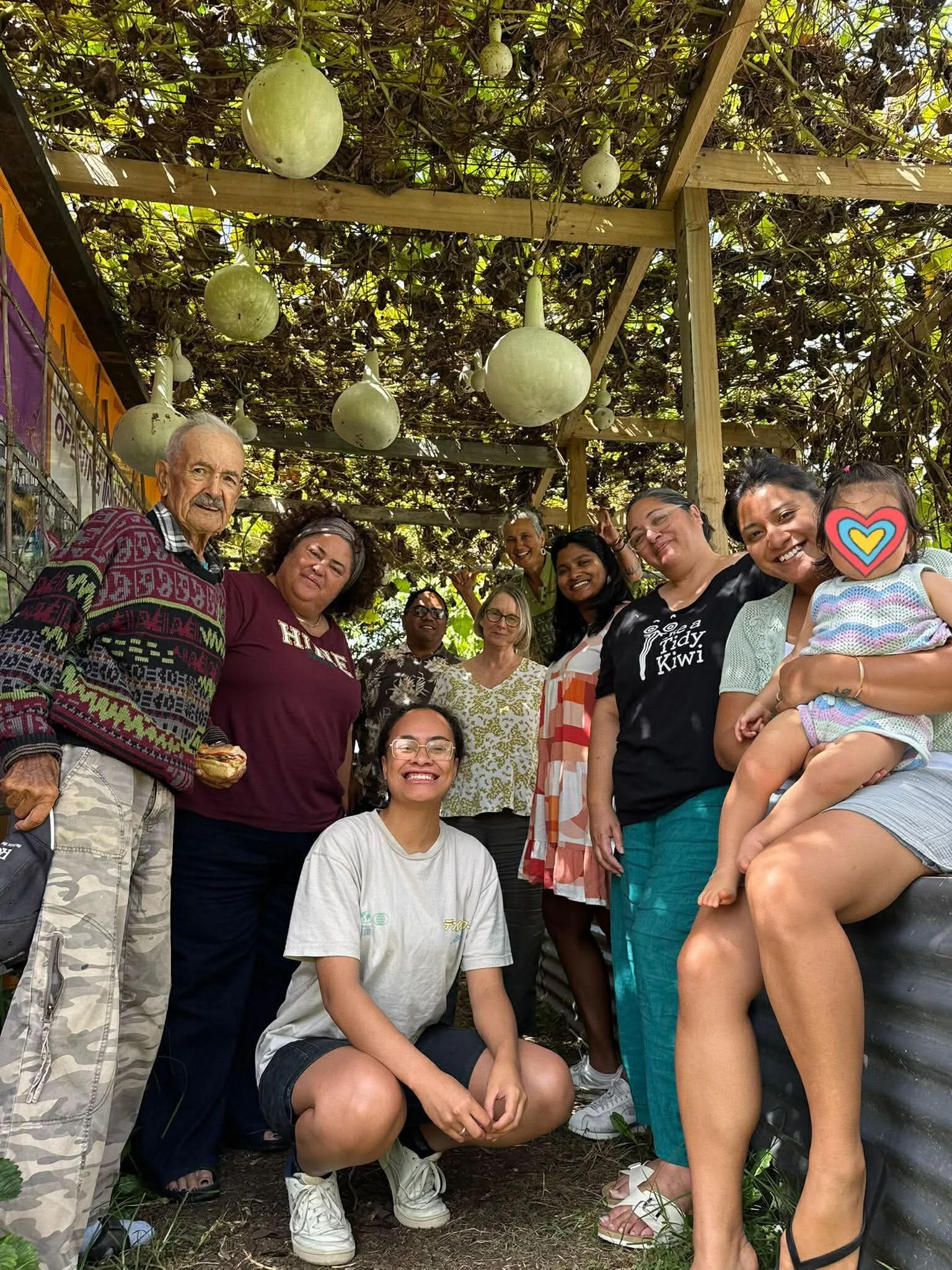
Group photo under our Hue waka at Boundary, following ‘Grow to Share assessment and planning’ with Council’s Petelo, Cynthia & Carole
In the past couple months we have been working away at strengthening kai resilience across Tāmaki through our projects Grow to share, Fill the pantry and Kaiwaka.
Grow to Share focuses on working with churches. As we know, temples often have lots of land with untapped growing potential. Our Grow to share program supports churches of all denominations to utilise their land, to teach and feed their members, supporting their families. We started with vege boxes but are now pivoting to fruit trees which can be prolific with little manual effort in the long run. If a zombie apocalypse hit, these members would know where to go for kai.
Council have been a crucial collaborator helping us make this a reality, with places of worship in Māngere, Ōtara and Henderson reaping what they sow, literally growing to share within their congregations. We had a meeting with council mid Feb, to assess our Grow to Share program as it currently is, looking at gaps and ways we can improve our delivery for these well established communities.
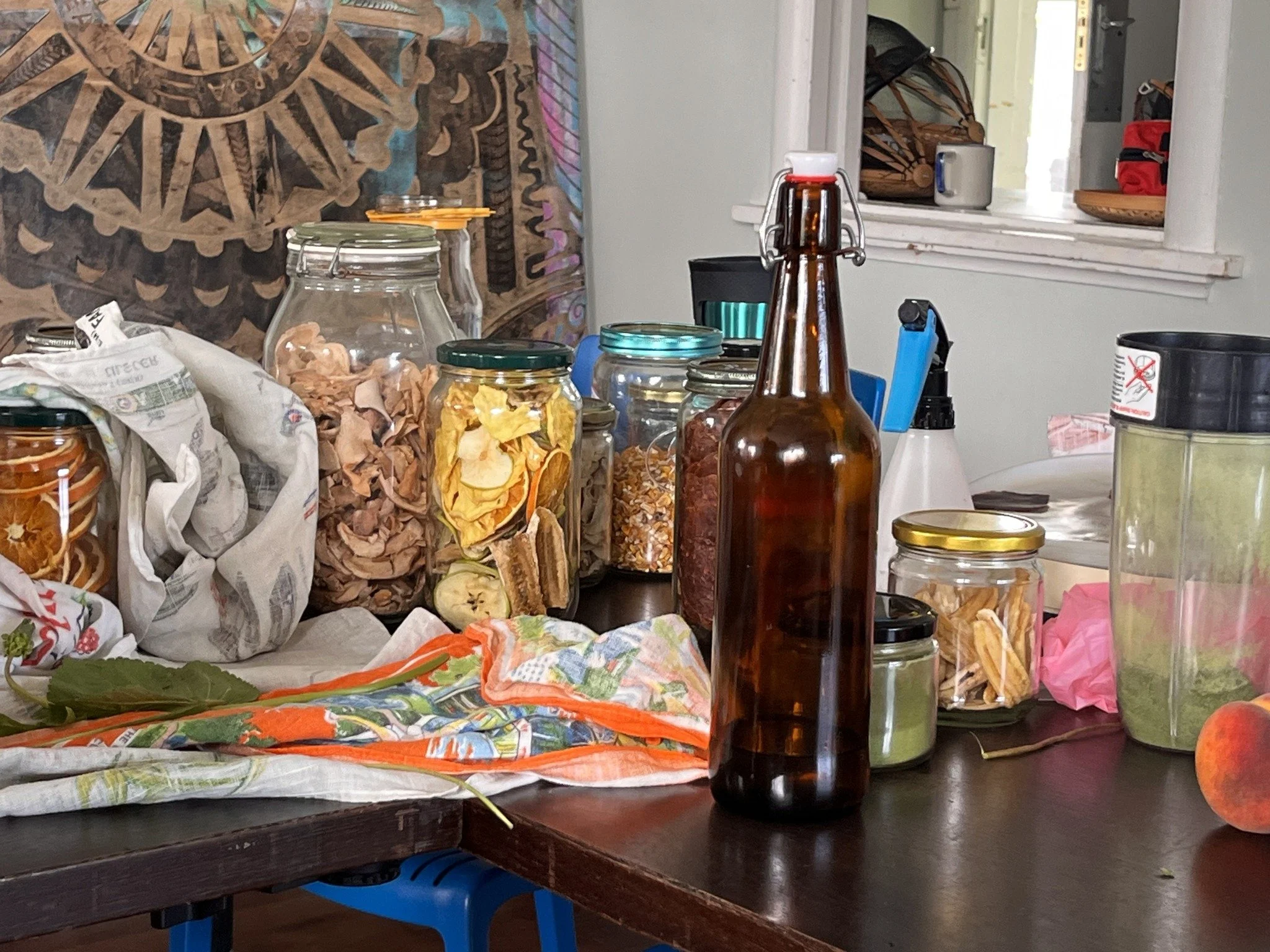
Fill the Pantry: Jarred fruits and veges at workshop with expert Ellen Schindler & PVA at Boundary, Ōtara
Our Fill the Pantry project is gaining interest all over Tāmaki and so far we’ve run workshops in the south and west. Whānau are realising that veges are perishable with only a short life once pulled, and with prices rising the last thing we want to do is waste kai that can nourish us. Through our preserving workshops we can ‘fill the pantry’, not just the fridge, extending the essence of fruit, veges & meat and enjoy their goodness a little longer. This puts into practice what our ancestors did long ages ago in preparation for the colder months when growth was slow and harvests limited. Out came the preserves; allowing our tupuna and their whānau to enjoy summer grown kūmara in the cold of winter, creating food security for that scarce period - not just to survive the cold months, but to be strong and well. These days we have the luxury of finding good deals on seasonal produce, how about grabbing an extra kilo to preserve?
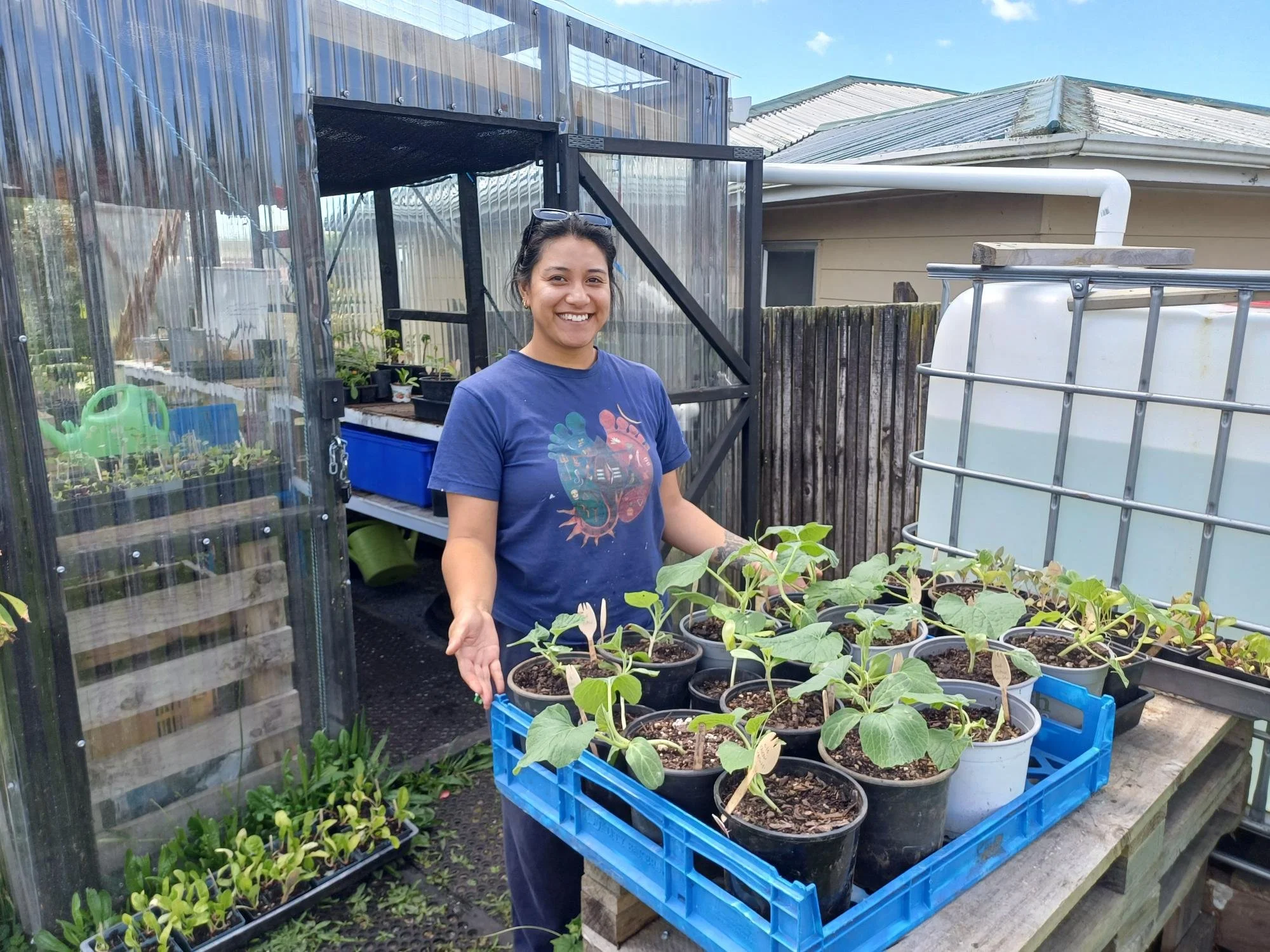
Hue seedlings grown from seed in our Ko’anga, ready for sharing & planting to grow water bottles, food containers, art…..
Our biggest project KaiWaka encapsulates the above and is what we see as the foundation of kai resilience. We have 4 projects that uphold KaiWaka like a whare tapa whā - Our Seed sanctuary, Ko’anga nursery, Food forest and Whenua to whenua. Through our Seed sanctuary we’re growing and supplying eco-sourced heirloom seed, our Ko’anga nursery is resourcing our locals in Ōtara with spray free seedlings, our ‘Food forest’ is extending into Te Pae o Manukau bringing food security & resources accessible in a public space, and ‘Whenua to whenua’ recycling kai, growing compost feeding soil and organisms beneath to grow new seed, nourish kai and whenua. By practising each of these pou, we strengthen our ability to have kai and care for te taiao for generations to come. We’re definitely seeing a need for KaiWaka across our Pasifika communities.
We believe that onboarding the KaiWaka and honouring all aspects of this taonga that is kai, will get us to our island of success. Where food and health is abundant, wairua and whānau flourish and everyone has a role no matter age or ability.
We’ve just employed a new PVA crew member into our KaiWaka space, and with continuing support from council and community partners, with head, heart and hands involved for kai resilience in Tāmaki, we’re excited for what’s to come.