
Te Ara o te Hue: Carve, Create, Adorn waananga
Our Hue Project focused on strengthening connections across Tāmaki through ancestral plants and shared learning. Last season, more than 60 schools, community groups, and individuals took part, growing hue from seeds from our sanctuary and tipu from our Ko'anga nursery.
After a season of sharing seed, growing seedlings and harvesting hue the time came to decorate at our Hue Creations waananga. It was an honour to invite Natures Gentleman Numa Mackenzie to collaborator Māngere Mountain Education Centre/MMEC, which is the home of where we were gifted our first seedling that propelled PVA into growing hue 5 years ago. The purpose of this waananga was to complete the loop of ‘Te ara o te hue’ by inviting all who participated to come along and adorn their hue.
We received some heart warming feedback from a couple attendees below:
“Attending the workshop… on carving bottle gourds at Māngere Mountain Education Centre. It was organised by Pacific Vision Aotearoa, and was a truly exciting and inspiring experience for me. It opened my eyes to the wide variety of bottle gourds available— different shapes, sizes, and seeds that I had never known about before.
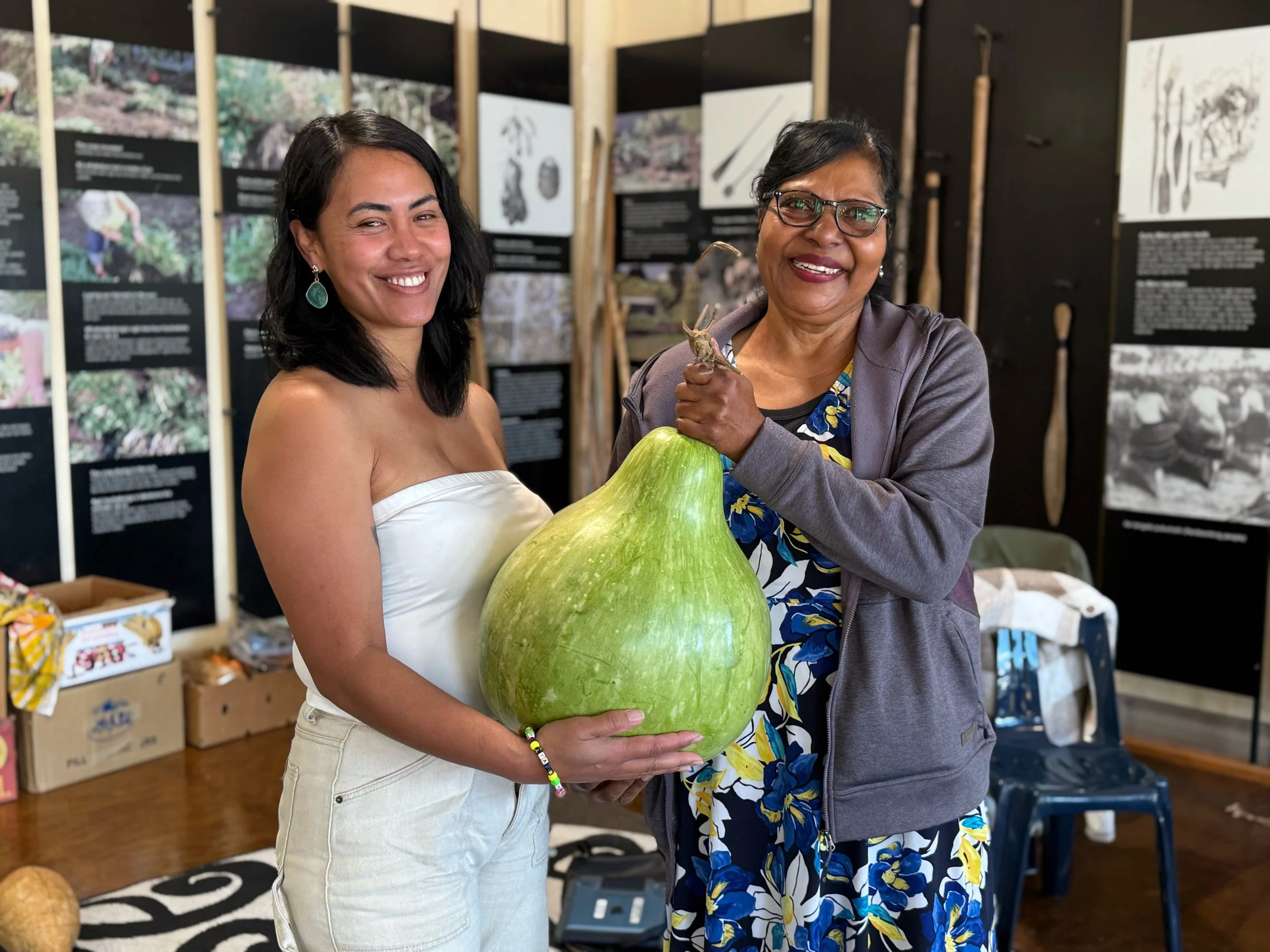
From left: Tanya and Lata Kumari from Murdoch Kindergaten at our Hue Creations waananga.
Coming from an Indian background, I had mainly been familiar with the long bottle gourd used in cooking, especially for curries. However, this workshop helped me appreciate how different cultures use bottle gourds in creative and meaningful ways. I felt proud to share the bottle gourd chutney made by Hana, our former head teacher, which was well received by everyone. It was encouraging when participants appreciated it and even asked me to upload the recipe to their website.
I was particularly inspired by the creative possibilities of bottle gourds. Seeing people transform them into musical instruments, decorative lights, and especially beautiful earrings was fascinating. Learning the process of carving, oiling, and preserving the gourds gave me new knowledge and skills. The demonstration of making special oil to protect the gourds was also very valuable. At the same time, the workshop prompted me to reflect on how these experiences could be adapted for our tamariki in a safe and meaningful way. Carving tools and wood-burning equipment can be sharp and require careful handling, so they may not be suitable for children to use independently. However, there are still many ways tamariki can be involved in the creative process. They could design and draw patterns on the gourds, explore scraping the outer layer under close supervision, and participate in the preparation stages. Adults could support with the more complex carving work.
This experience has encouraged me to think about how to provide rich, culturally responsive, and safe learning opportunities that extend tamariki creativity while ensuring their wellbeing.”
-Lata Kumari, Teacher Murdoch Park Kindergarten
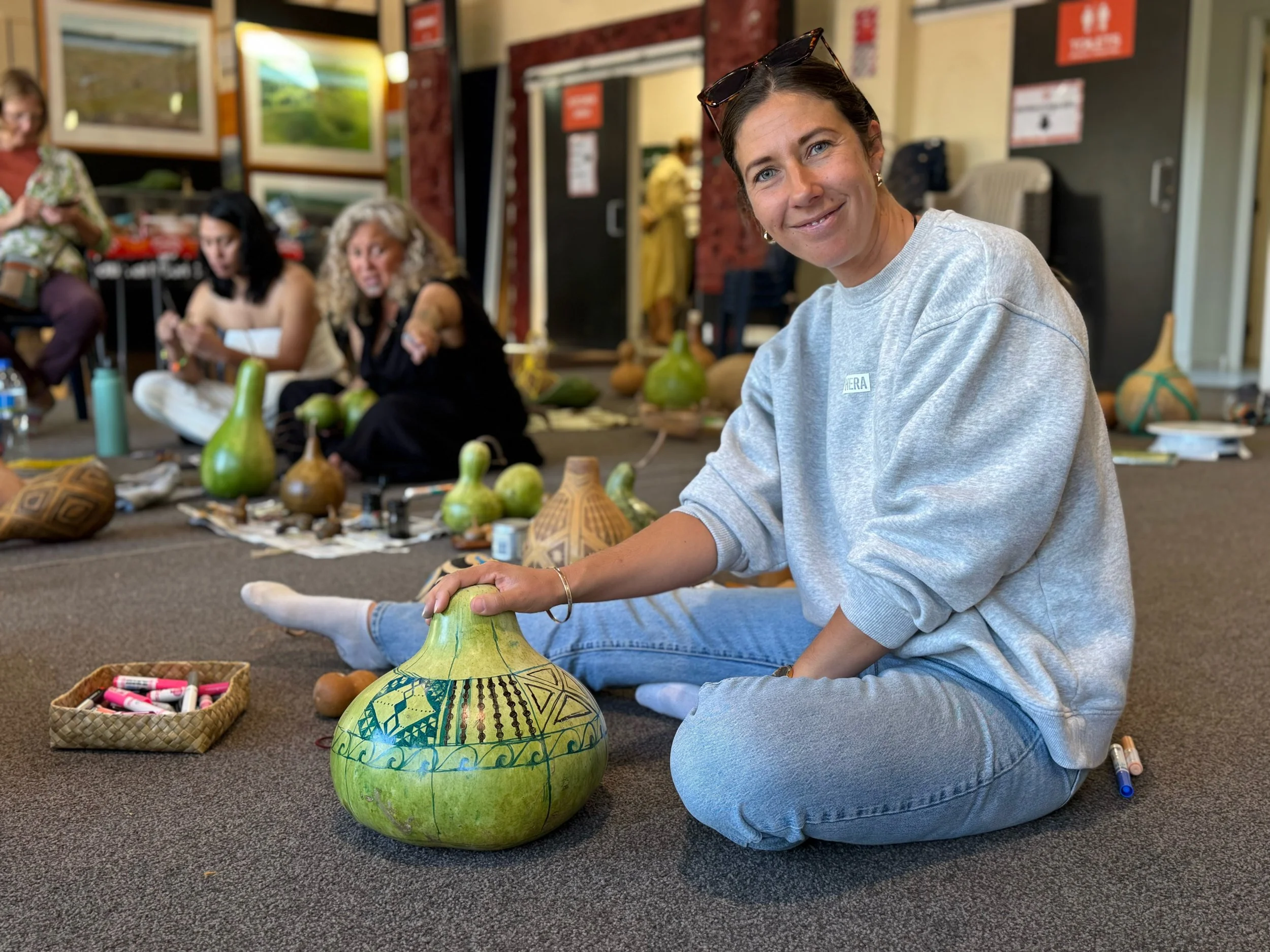
Melissa with her Hue creation at our waananga
“My journey growing hue has been full of surprises and one of the most rewarding gardening experiences. Growing something with such rich whakapapa and sharing that with tamariki has been awesome. I loved the wananga hosted by PVA, it was inspiring to be around other hue enthusiasts learning how to carve and adorn these taonga. E mihi ana ki PVA i ō whakaakoako me ō mātauranga.”
-Melissa Williamson, Taupaki School
What a beautiful turnout for our Hue Creation Wānanga. This feedback speaks to the power of the hue to connect and inspire people, everyone sharing their own journey whether it was for healing, creativity, music, kai or wairua. So much creativity, connection and kōrero flowing as we gathered together to mahi toi and share stories of our hue. Huge mihi to Zane for hosting us a MMEC and to Wendy Apaapa for bringing your beautiful hue to share. And to our incredible creative @numanaturesgentleman for inspiring us all and bringing the kaupapa to life in such a unique way. So awesome creating together!!!
Watch our reel from this special waananga on our Facebook page, here.